Blog
Does Teeth Whitening Damage Enamel?
A straightforward look at enamel safety during teeth whitening. West Road Dental explains how professional whitening works, what causes sensitivity, and how to choose a safe treatment.
Most people like the idea of a brighter smile. What stops many is the same question:
“Will this damage my enamel?”
It’s a fair concern. Enamel protects teeth from temperature changes, pressure and daily wear. Once it’s worn down, it does not grow back. So when patients at our Dentist Oakham Rutland clinic ask about whitening, the first thing they want is clarity — not promises, not pressure. Just the truth.
This guide gives you a clear look at how whitening works, what it can safely achieve and the situations where caution is needed. If you’re considering a teeth whitening treatment, this will help you make an informed decision with confidence.
The Role of Enamel: Why People Feel Cautious
Enamel is strong but still vulnerable to:
- Acidic foods and drinks
- Teeth grinding
- Aggressive brushing
- Long-term plaque build-up
- Natural ageing
Because enamel is so important, anything that might affect it deserves proper explanation. Many people assume whitening “strips” enamel or scrapes away the top layer. That isn’t how professional whitening works.
What Professional Whitening Actually Does
Dental whitening does not remove enamel. It works by changing the way light reflects off the tooth.
Here’s the process in simple terms:
- A whitening gel is applied to the teeth
- The gel enters microscopic pores in the enamel
- Stains within those pores break down
- The natural tooth shade becomes lighter
Nothing is filed or sanded away. No enamel is taken off. The tooth structure remains intact.
Because the enamel pores temporarily open during whitening, teeth can feel more sensitive. This is normal and short-lived. It is not a sign of enamel damage.
Sensitivity vs. Damage — They Are Not the Same Thing
This is where confusion usually starts.
Sensitivity after whitening:
- Comes from temporary pore opening
- Is common
- Lasts one to two days
- Is managed easily with fluoride or lower-strength gels
Enamel damage:
- Is permanent
- Affects strength and structure
- Leads to long-term sensitivity and wear
Professional whitening does not cause the second scenario.
When sensitivity is monitored and managed, whitening is safe for most adults with healthy teeth.
Where Whitening Becomes Risky: The Situations to Avoid
The real risks don’t come from dental clinics. They come from:
1. Abrasive powders
Charcoal, baking soda and other rough particles scratch enamel. Teeth may appear whiter at first because the surface is physically worn — not because stains are lifted.
2. Acid-based “home hacks”
Lemon juice, vinegar and similar acids soften enamel and accelerate wear.
3. Kits with unknown strengths
Some online kits use unregulated gels that can irritate gums or cause prolonged sensitivity.
4. Ill-fitting trays
When trays don’t fit properly, gel leaks onto gums and causes burns or patchy results.
Professional whitening avoids these problems because every step is controlled, measured and supervised.
What Whitening Can Improve — And What It Cannot
Managing expectations is part of protecting enamel and ensuring treatment success.
Professional whitening can remove:
- Staining from tea, coffee, wine and smoking
- Natural yellowing with age
- Deep surface discolouration
Professional whitening cannot change:
- Crowns
- Veneers
- Bridges
- White fillings
It also cannot fix internal discolouration caused by trauma or certain medications. In those cases, your dentist may suggest alternatives such as bonding or veneers.
A safe whitening plan always starts with identifying which stains are treatable and which aren’t.
How Dentists Protect Enamel During Whitening
When whitening is done professionally, every step is designed around safety and accuracy.
1. A full dental assessment
Your enamel, gums, fillings and overall oral health are checked first. Whitening should never begin until everything is confirmed as healthy.
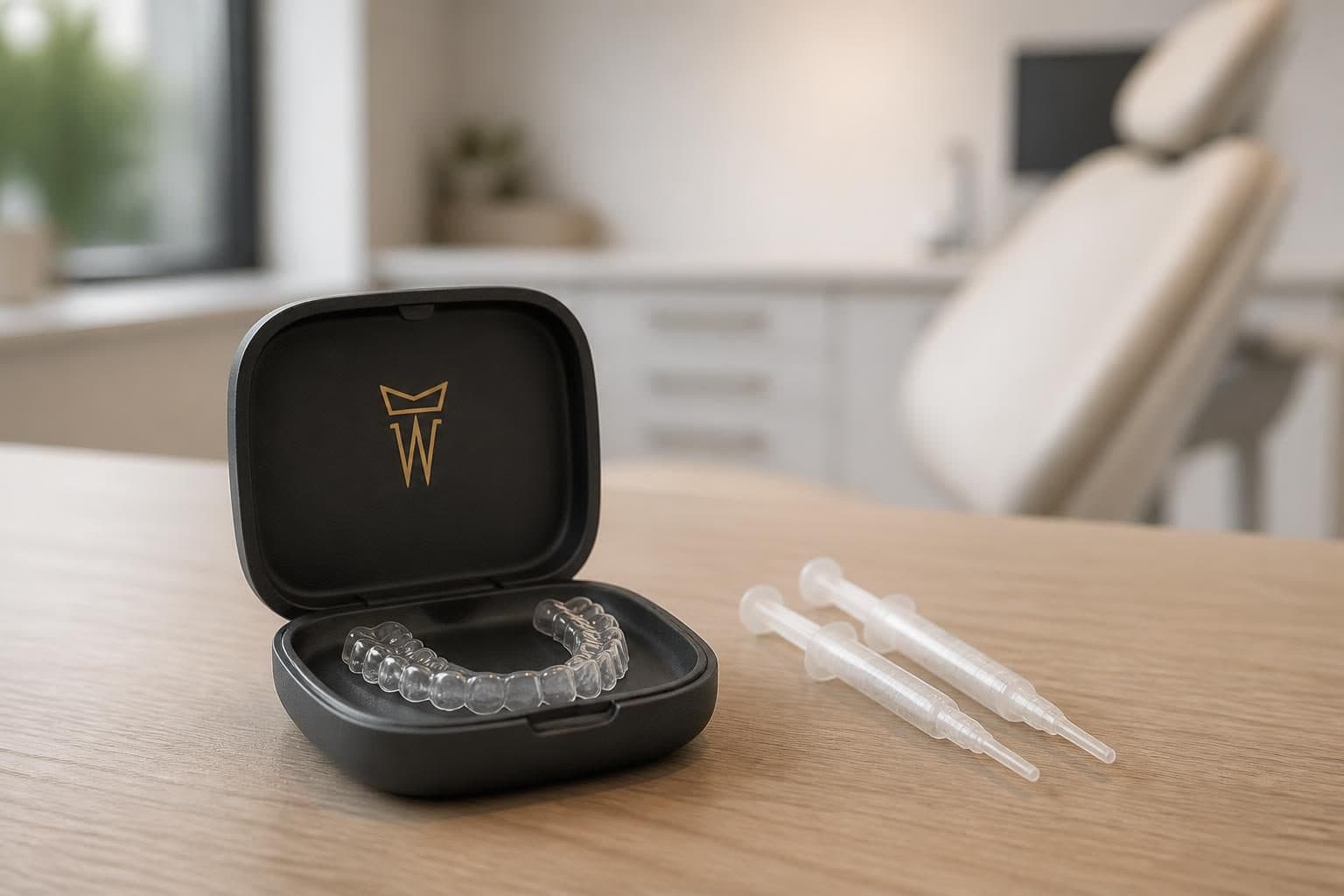
2. Custom-made whitening trays
These fit your teeth exactly, keeping the gel in place and preventing irritation.
3. Regulated whitening gels
Clinics use gels that meet strict UK safety standards.
4. Gum protection
Before in-chair whitening, the gums are shielded with a protective barrier.
5. Monitoring throughout
Shade changes, sensitivity and gel placement are checked throughout treatment.
6. Clear aftercare
You receive guidance on how to look after your enamel and maintain results.
This combination of steps is what makes professional whitening safe.
How to Care for Enamel After Whitening
To keep enamel strong after whitening:
- Use fluoride toothpaste morning and night
- Avoid brushing immediately after acidic drinks
- Rinse with water after tea, coffee or wine
- Limit snacking between meals
- Continue regular check-ups with your dentist
These habits protect enamel daily — whitening simply becomes one part of your overall care.
So, Does Teeth Whitening Damage Enamel?
Here is the clear, evidence-based answer:
When done professionally, teeth whitening does not damage enamel.
The whitening gel targets stains, not the tooth structure.
Enamel is not scraped, sanded, thinned or removed.
Problems arise only when whitening is done without proper guidance or with products that are abrasive or acidic.
If you’ve been unsure because of mixed information online, speaking with a dental professional will give you personalised clarity based on your own teeth, enamel condition and goals.
If You Want a Brighter Smile, Start with Good Advice
If you’re considering a teeth whitening treatment but want reassurance about enamel safety, a proper assessment is the best first step.
At West Road Dental, we offer clear guidance based on your enamel health, stain type and treatment goals. You’ll know exactly what whitening can achieve and whether it’s suitable for your teeth.
Book a consultation at West Road Dental for straightforward, professional whitening advice tailored to your smile.
Teeth whitening in Oakham
For how dentist-led whitening works at West Road, what it involves and how to book, see professional teeth whitening in Oakham.
Book an appointment
Call the practice or send us a message — we would be glad to help.